Minggu, 31 Oktober 2010

[G735.Ebook] Fee Download The Lexicon: An Introduction (Oxford Textbooks in Linguistics), by Elisabetta Jezek

Fee Download The Lexicon: An Introduction (Oxford Textbooks in Linguistics), by Elisabetta Jezek

Superb The Lexicon: An Introduction (Oxford Textbooks In Linguistics), By Elisabetta Jezek book is always being the very best friend for spending little time in your office, night time, bus, and all over. It will be a good way to merely look, open, and review guide The Lexicon: An Introduction (Oxford Textbooks In Linguistics), By Elisabetta Jezek while in that time. As understood, encounter and also skill do not always featured the much money to get them. Reading this publication with the title The Lexicon: An Introduction (Oxford Textbooks In Linguistics), By Elisabetta Jezek will certainly allow you understand more points.

The Lexicon: An Introduction (Oxford Textbooks in Linguistics), by Elisabetta Jezek

The Lexicon: An Introduction (Oxford Textbooks in Linguistics), by Elisabetta Jezek


The Lexicon: An Introduction (Oxford Textbooks in Linguistics), by Elisabetta Jezek

Fee Download The Lexicon: An Introduction (Oxford Textbooks in Linguistics), by Elisabetta Jezek

The Lexicon: An Introduction (Oxford Textbooks In Linguistics), By Elisabetta Jezek. Is this your downtime? What will you do then? Having spare or leisure time is extremely outstanding. You can do everything without pressure. Well, we mean you to spare you few time to read this publication The Lexicon: An Introduction (Oxford Textbooks In Linguistics), By Elisabetta Jezek This is a god book to accompany you in this free time. You will not be so hard to recognize something from this e-book The Lexicon: An Introduction (Oxford Textbooks In Linguistics), By Elisabetta Jezek A lot more, it will certainly assist you to get far better details and experience. Even you are having the terrific tasks, reading this e-book The Lexicon: An Introduction (Oxford Textbooks In Linguistics), By Elisabetta Jezek will not add your mind.

This is why we advise you to constantly visit this resource when you require such book The Lexicon: An Introduction (Oxford Textbooks In Linguistics), By Elisabetta Jezek, every book. By online, you could not getting the book shop in your city. By this online library, you could find the book that you truly intend to read after for long period of time. This The Lexicon: An Introduction (Oxford Textbooks In Linguistics), By Elisabetta Jezek, as one of the suggested readings, has the tendency to remain in soft data, as all of book collections right here. So, you may additionally not await few days later on to get and check out guide The Lexicon: An Introduction (Oxford Textbooks In Linguistics), By Elisabetta Jezek.

The soft documents suggests that you have to go to the link for downloading and install and afterwards conserve The Lexicon: An Introduction (Oxford Textbooks In Linguistics), By Elisabetta Jezek You have actually owned guide to read, you have positioned this The Lexicon: An Introduction (Oxford Textbooks In Linguistics), By Elisabetta Jezek It is easy as visiting the book shops, is it? After getting this brief description, ideally you can download one and also start to read The Lexicon: An Introduction (Oxford Textbooks In Linguistics), By Elisabetta Jezek This book is extremely easy to check out each time you have the downtime.

It's no any type of faults when others with their phone on their hand, and also you're also. The distinction could last on the material to open The Lexicon: An Introduction (Oxford Textbooks In Linguistics), By Elisabetta Jezek When others open up the phone for talking and talking all points, you can occasionally open up and review the soft documents of the The Lexicon: An Introduction (Oxford Textbooks In Linguistics), By Elisabetta Jezek Obviously, it's unless your phone is available. You can also make or wait in your laptop or computer that alleviates you to read The Lexicon: An Introduction (Oxford Textbooks In Linguistics), By Elisabetta Jezek.

The Lexicon: An Introduction (Oxford Textbooks in Linguistics), by Elisabetta Jezek

This book provides an introduction to the study of words, their main properties and how we use them to create meaning. It offers a detailed description of the organizational principles of the lexicon, and of the categories used to classify various lexical phenomena, including polysemy, meaning variation, behaviour in composition, and the interface with pragmatics. Elisabetta Jezek uses empirical data from digitalized corpora and speakers' judgements, combined with the formalisms developed in the field of general and theoretical linguistics, to propose representations for each of these phenomena. The book's clear structure and accessible approach make it an ideal textbook for all students of linguistics and a valuable resource for scholars and students of language in the fields of cognitive science and philosophy.

  • Sales Rank: #2356485 in Books
  • Published on: 2016-03-28
  • Released on: 2016-01-28
  • Original language: English
  • Number of items: 1
  • Dimensions: 6.70" h x .60" w x 9.60" l, .0 pounds
  • Binding: Paperback
  • 320 pages

About the Author

Elisabetta Jezek is an associate professor at the University of Pavia, where she has taught syntax and semantics and applied linguistics since 2001. Her research interests include lexical semantics, verb classification, theory of argument structure, event structure in syntax and semantics, lexicon/ontology interplay, word class systems, and computational lexicography. She has edited a number of major works in lexicography and published contributions focusing on the interplay between corpus analysis, research methodology, and linguistic theory.

Most helpful customer reviews

0 of 0 people found the following review helpful.
Excellent book on the lexicon, integrating a wide variety of perspectives and approaches
By Kevin B. Cohen
"The Lexicon" does a really nice job of comparing and contrasting different takes on many aspects of the lexicon, ranging from the basic ideas, through the historically important theoretical issues, to the global structure of the lexicon, and then to the different paradigmatic and syntagmatic structures that characterize it. A recurring theme in the book is to examine a question from a variety of perspectives, then show how each of those perspectives gives different types of insight into the question, and discuss how these different kinds of insights can be combined to yield a nuanced understanding of the topic. For example, the discussion of the possibilities for integration of formal and distributional representations of semantic representations paints a picture of how lexical semantics could be both theoretically interesting and empirically supported.

One of the nice things about this book is that it provides a very nice combination of theoretical perspective and practical application. For example, the section on noun compounds discusses the theoretical context of this kind of multi-word expression from the points of view of semantic constituency and of lexicography, and then gives (and explains the rationale behind) a number of tests to use to determine the status of particular noun compounds.

There are a couple of organizational aspects of the book that make it easy, and even pleasant, to read. One is heavy use of tables to summarize and integrate information about contrasting categories, e.g. entity order types, different theoretical perspectives on sentence structure, verb classes, classes of entity nouns based on formal properties, and classes of event nouns. Another is the use of side bars to set off material that adds quite a bit to the ability of the reader to apply analytically the concepts under discussion, but would interrupt the flow of discussion otherwise, such as tests for wordhood, criteria for classifying compounds, approaches to event representation, and the like.

I haven’t often picked up the book without quickly going to my computer to modify my lecture notes—professors will find the clear lay-out of the exposition of all topics to be as helpful for didactic purposes as students will find them to be for studying.

See all 1 customer reviews...

The Lexicon: An Introduction (Oxford Textbooks in Linguistics), by Elisabetta Jezek PDF
The Lexicon: An Introduction (Oxford Textbooks in Linguistics), by Elisabetta Jezek EPub
The Lexicon: An Introduction (Oxford Textbooks in Linguistics), by Elisabetta Jezek Doc
The Lexicon: An Introduction (Oxford Textbooks in Linguistics), by Elisabetta Jezek iBooks
The Lexicon: An Introduction (Oxford Textbooks in Linguistics), by Elisabetta Jezek rtf
The Lexicon: An Introduction (Oxford Textbooks in Linguistics), by Elisabetta Jezek Mobipocket
The Lexicon: An Introduction (Oxford Textbooks in Linguistics), by Elisabetta Jezek Kindle

The Lexicon: An Introduction (Oxford Textbooks in Linguistics), by Elisabetta Jezek PDF

The Lexicon: An Introduction (Oxford Textbooks in Linguistics), by Elisabetta Jezek PDF

The Lexicon: An Introduction (Oxford Textbooks in Linguistics), by Elisabetta Jezek PDF

Minggu, 24 Oktober 2010

[K296.Ebook] PDF Ebook The Dow Theory Today, by Richard Russell

PDF Ebook The Dow Theory Today, by Richard Russell

Curious? Obviously, this is why, we expect you to click the web link web page to go to, and after that you could appreciate the book The Dow Theory Today, By Richard Russell downloaded until finished. You can save the soft documents of this The Dow Theory Today, By Richard Russell in your gadget. Obviously, you will bring the gadget anywhere, will not you? This is why, every single time you have extra time, each time you could appreciate reading by soft duplicate book The Dow Theory Today, By Richard Russell

The Dow Theory Today, by Richard Russell

The Dow Theory Today, by Richard Russell


The Dow Theory Today, by Richard Russell

PDF Ebook The Dow Theory Today, by Richard Russell

The Dow Theory Today, By Richard Russell. In undergoing this life, many individuals always aim to do and get the very best. New understanding, encounter, lesson, as well as every little thing that can enhance the life will be done. Nevertheless, numerous individuals in some cases really feel puzzled to obtain those points. Really feeling the limited of encounter and resources to be far better is one of the does not have to have. However, there is a really basic point that could be done. This is what your instructor always manoeuvres you to do this one. Yeah, reading is the solution. Reviewing a book as this The Dow Theory Today, By Richard Russell and also various other referrals can enhance your life top quality. Exactly how can it be?

This letter might not affect you to be smarter, but the book The Dow Theory Today, By Richard Russell that our company offer will certainly stimulate you to be smarter. Yeah, at least you'll recognize greater than others that don't. This is exactly what called as the high quality life improvisation. Why needs to this The Dow Theory Today, By Richard Russell It's since this is your preferred motif to check out. If you like this The Dow Theory Today, By Richard Russell theme around, why do not you check out the book The Dow Theory Today, By Richard Russell to enrich your discussion?

The here and now book The Dow Theory Today, By Richard Russell our company offer right here is not type of common book. You understand, reviewing currently doesn't suggest to manage the published book The Dow Theory Today, By Richard Russell in your hand. You can get the soft documents of The Dow Theory Today, By Richard Russell in your gadget. Well, we suggest that the book that we extend is the soft documents of the book The Dow Theory Today, By Richard Russell The content and all things are same. The difference is just the kinds of the book The Dow Theory Today, By Richard Russell, whereas, this condition will precisely be profitable.

We discuss you additionally the means to obtain this book The Dow Theory Today, By Richard Russell without visiting guide store. You can remain to go to the web link that we give as well as ready to download The Dow Theory Today, By Richard Russell When many individuals are busy to look for fro in the book shop, you are extremely simple to download and install the The Dow Theory Today, By Richard Russell here. So, what else you will choose? Take the inspiration here! It is not only providing the ideal book The Dow Theory Today, By Richard Russell however likewise the right book collections. Below we consistently give you the best and also easiest way.

The Dow Theory Today, by Richard Russell

A collection of articles written for Barron's. Some of the articles pertain to general Dow Theory or to market history as interpreted under Dow's Theory.

  • Sales Rank: #1181258 in Books
  • Brand: Brand: Snowball Publishing
  • Published on: 2012-09-24
  • Original language: English
  • Number of items: 1
  • Dimensions: 9.02" h x .28" w x 5.98" l, .40 pounds
  • Binding: Paperback
  • 130 pages
Features
  • Used Book in Good Condition

About the Author
Richard Russell is an author and owner of Reminiscing Books. He has a 2009 Special Recognition from the WNC Historical Association as well as being the 2009 Thomas Wolfe Memorial Literary Award recipient.

Most helpful customer reviews

22 of 22 people found the following review helpful.
A vital book for investors
By Charles Pettis
The percentage of people investing in the stock market is at an historical high, yet few people understand that the markets rise and fall in definite patterns. These patterns are explained by Dow Theory, devised by Charles H. Dow who was the founder of the still famous Dow averages. The leading Dow Theory practitioner of today is Richard Russell (...). Richard Russell wrote this little book in 1961 about the stock market from 1958-1960. His commentary about this period in stock market history is directly applicable to today's stock market situation. This book teaches the difference between a bull and bear market, proven over a century of stock market statistics.

19 of 21 people found the following review helpful.
Good introduction to Dow's Theory
By Michael Goode
Richard Russell is one of the few 'old fogeys' (as Mark Hulbert likes to say) still analyzing the market who went through the last market top and then the 70s bear market. This book is a collection of a series of articles Russell wrote between 1958 and 1960, in which he successfully predicted that in 1958 the bull was still alive, and in 1960, that the bear market had started. This is a small book, concise, and is a good introduction to Dow's Theory--a method for timing the markets.

Russell is still writing ([...]) on the market. He is often dismissed as a perma-bear these days (he has been consistently bearish from 1999 till now, 2005, and says that the bull market of the last two years was only a temporary correction of a huge secular bear market), but seeing his earlier courageous call of the bull market continuation in 1958 is one reason I pay attention to him, and to the Dow Theory in general.

For those who haven't heard of it, Charles Dow came up with a method for timing the markets. His successor at the Wall Street Journal, William Peter Hamilton, revised this method, and since then it has changed little. Unless you are a masochist, avoid Hamilton's book. Robert Rhea was another Dow Theorist and his book is another one that might be of interest. The key to Dow Theory is watching the movement of the stock averages, and everything that is useful will be reflected in those movements--knowledge of business, investor psychology, etc. The key is also values--stocks will tend to return to their average historical values (but always overshoot, going from undervalued to overvalued, and vice-versa). Anyway, for more info, read the book.

6 of 7 people found the following review helpful.
Helps You Understand Trends, Tops and Bottoms
By David Rankin
While most investment books cover the importance of trends, this book actually gives you an understanding of the motion of trends and the influence of the larger market represented by the Dow Jones Industrials and Transports.

See all 8 customer reviews...

The Dow Theory Today, by Richard Russell PDF
The Dow Theory Today, by Richard Russell EPub
The Dow Theory Today, by Richard Russell Doc
The Dow Theory Today, by Richard Russell iBooks
The Dow Theory Today, by Richard Russell rtf
The Dow Theory Today, by Richard Russell Mobipocket
The Dow Theory Today, by Richard Russell Kindle

The Dow Theory Today, by Richard Russell PDF

The Dow Theory Today, by Richard Russell PDF

The Dow Theory Today, by Richard Russell PDF

Jumat, 22 Oktober 2010

[N212.Ebook] Fee Download Digital Image Processing Using MATLAB, 2nd ed., by Rafael C. Gonzalez, Richard E. Woods, Steven L. Eddins

Fee Download Digital Image Processing Using MATLAB, 2nd ed., by Rafael C. Gonzalez, Richard E. Woods, Steven L. Eddins

Sooner you get the e-book Digital Image Processing Using MATLAB, 2nd Ed., By Rafael C. Gonzalez, Richard E. Woods, Steven L. Eddins, faster you can appreciate reviewing the book. It will be your rely on keep downloading and install the book Digital Image Processing Using MATLAB, 2nd Ed., By Rafael C. Gonzalez, Richard E. Woods, Steven L. Eddins in provided link. This way, you could actually choose that is offered to obtain your very own publication online. Right here, be the very first to obtain the e-book entitled Digital Image Processing Using MATLAB, 2nd Ed., By Rafael C. Gonzalez, Richard E. Woods, Steven L. Eddins as well as be the very first to understand just how the writer indicates the message and also expertise for you.

Digital Image Processing Using MATLAB, 2nd ed., by Rafael C. Gonzalez, Richard E. Woods, Steven L. Eddins

Digital Image Processing Using MATLAB, 2nd ed., by Rafael C. Gonzalez, Richard E. Woods, Steven L. Eddins


Digital Image Processing Using MATLAB, 2nd ed., by Rafael C. Gonzalez, Richard E. Woods, Steven L. Eddins

Fee Download Digital Image Processing Using MATLAB, 2nd ed., by Rafael C. Gonzalez, Richard E. Woods, Steven L. Eddins

Digital Image Processing Using MATLAB, 2nd Ed., By Rafael C. Gonzalez, Richard E. Woods, Steven L. Eddins. Is this your spare time? What will you do after that? Having extra or spare time is very remarkable. You could do everything without pressure. Well, we mean you to exempt you couple of time to review this publication Digital Image Processing Using MATLAB, 2nd Ed., By Rafael C. Gonzalez, Richard E. Woods, Steven L. Eddins This is a god book to accompany you in this leisure time. You will certainly not be so difficult to understand something from this e-book Digital Image Processing Using MATLAB, 2nd Ed., By Rafael C. Gonzalez, Richard E. Woods, Steven L. Eddins A lot more, it will certainly assist you to get far better info and experience. Also you are having the fantastic jobs, reading this book Digital Image Processing Using MATLAB, 2nd Ed., By Rafael C. Gonzalez, Richard E. Woods, Steven L. Eddins will certainly not include your mind.

This book Digital Image Processing Using MATLAB, 2nd Ed., By Rafael C. Gonzalez, Richard E. Woods, Steven L. Eddins offers you better of life that could create the top quality of the life better. This Digital Image Processing Using MATLAB, 2nd Ed., By Rafael C. Gonzalez, Richard E. Woods, Steven L. Eddins is what the people now require. You are here as well as you could be exact and also certain to obtain this book Digital Image Processing Using MATLAB, 2nd Ed., By Rafael C. Gonzalez, Richard E. Woods, Steven L. Eddins Never doubt to get it also this is simply a publication. You can get this book Digital Image Processing Using MATLAB, 2nd Ed., By Rafael C. Gonzalez, Richard E. Woods, Steven L. Eddins as one of your compilations. But, not the collection to display in your bookshelves. This is a valuable book to be reading collection.

Exactly how is making certain that this Digital Image Processing Using MATLAB, 2nd Ed., By Rafael C. Gonzalez, Richard E. Woods, Steven L. Eddins will not presented in your shelfs? This is a soft data book Digital Image Processing Using MATLAB, 2nd Ed., By Rafael C. Gonzalez, Richard E. Woods, Steven L. Eddins, so you can download and install Digital Image Processing Using MATLAB, 2nd Ed., By Rafael C. Gonzalez, Richard E. Woods, Steven L. Eddins by buying to obtain the soft data. It will certainly relieve you to review it each time you need. When you feel careless to move the published publication from home to office to some area, this soft file will certainly ease you not to do that. Since you can only save the data in your computer hardware and gizmo. So, it allows you read it anywhere you have desire to check out Digital Image Processing Using MATLAB, 2nd Ed., By Rafael C. Gonzalez, Richard E. Woods, Steven L. Eddins

Well, when else will certainly you discover this possibility to obtain this book Digital Image Processing Using MATLAB, 2nd Ed., By Rafael C. Gonzalez, Richard E. Woods, Steven L. Eddins soft data? This is your great opportunity to be right here as well as get this fantastic book Digital Image Processing Using MATLAB, 2nd Ed., By Rafael C. Gonzalez, Richard E. Woods, Steven L. Eddins Never leave this book prior to downloading this soft data of Digital Image Processing Using MATLAB, 2nd Ed., By Rafael C. Gonzalez, Richard E. Woods, Steven L. Eddins in link that we give. Digital Image Processing Using MATLAB, 2nd Ed., By Rafael C. Gonzalez, Richard E. Woods, Steven L. Eddins will really make a large amount to be your best friend in your lonely. It will be the best partner to enhance your company and also pastime.

Digital Image Processing Using MATLAB, 2nd ed., by Rafael C. Gonzalez, Richard E. Woods, Steven L. Eddins

Digital Image Processing Using MATLAB is the first book to offer a balanced treatment of image processing fundamentals and the software principles used in their implementation. The book integrates material from the leading text, Digital Image Processing by Gonzalez and Woods, and the Image Processing Toolbox from The MathWorks, Inc., a leader in scientific computing. The Image Processing Toolbox provides a stable, well-supported software environment for addressing a broad range of applications in digital image processing. A unique feature of the book is its emphasis on showing how to enhance those tools by developing new code. This is important in image processing, an area that normally requires extensive experimental work in order to arrive at acceptable application solutions. Some Highlights: (1) This new edition is an extensive upgrade of the book. (2) Over 120 new MATLAB image processing functions are developed, a 40 % increase over existing functions in the Image Processing Toolbox. (3) Algorithms and MATLAB functions in the mainstream of digital image processing are discussed and implemented, including: Intensity transformations; spatial filtering; fuzzy image processing; filtering in the frequency domain; image restoration and reconstruction; geometric transformations and image registration; color image processing; wavelets; image and video compression; morphology; image segmentation; image representation and description; and object recognition. (4) In addition to a major revision of the topics from the first edition, features in this edition include new coverage of: The Radon transform; image processing functions based on function-generating functions (function factories); geometric transformations; image registration; color profiles and device-independent color conversions; functions for video compression; adaptive thresholding algorithms; new image features, including minimum-perimeter polygons and local (corner) features.

  • Sales Rank: #645850 in Books
  • Published on: 2009
  • Binding: Hardcover
  • 827 pages

Most helpful customer reviews

22 of 23 people found the following review helpful.
Indispensible
By Craig Macfarlane
I'm a biological scientist with little background in mathematics, and none in MATLAB or image processing, but launched myself into it nonetheless. I've bought and read 5-10 books dealing with MATLAB and image processing and this is by far the best, especially for beginners. I was able to progress from knowing next to nothing, to writing code to solve my particular image analysis problems in just a few weeks with the help of this book. I couldn't recommend it more highly, especially as it gives you access to the DIPUM toolbox as well.

I would also recommend Stormy Attway's introductory text on MATLAB if you are a complete newbie like me and need some extra help at the start.

For further reading on MATLAB as applied to image processing and access to more useful functions in the freely available medical imaging toolbox I would recommend "Image Processing with MATLAB: Applications in Medicine and Biology (MATLAB Examples)" and the associated website [...].

Between these three books and two websites/toolboxes you really have it covered.

17 of 20 people found the following review helpful.
Great content, disappointing printing quality
By A. H.
I ordered this book ("DIPUM", 2nd ed.) a few weeks ago.

The content is probably the best you can find on this topic. You probably already know the regular Gonzalez' "Digital Image Processing" book, if you have done anything on the topic of image processing before.

"DIPUM" combines "DIP" with many MATLAB recipes, so it focuses more on how to practically do things in MATLAB, and a little less on the theoretical background.

Steven L. Eddins is a co-author of this book. He works for Mathworks, the creators of MATLAB and of the image processing toolbox. In his blog "Steve on Image Processing" he gives a lot of useful advice on how to do image processing with MATLAB, and this book is just as useful.

So why did I rate this book with only two stars?

The reason is the very disappointing printing quality. There are several different prints of the 2nd edition of this book. At least there are two different versions: The first print was done on high quality glossy paper with high contrast. Just the way it's meant to be.
The second print (which I received, when I ordered this book a few weeks ago) was done on non-glossy paper with significantly lower quality. It also lacks contrast, so on many pictures you can't even see the effects that the authors want to show.

I got a copy of the first print from a local library, and a copy of the second print when I ordered this book myself, so I could compare them side by side.

Gatesmark Publishing should be ashamed for releasing such a high-priced title at such a low, unprofessional quality. The content does not deserve that.

I can only recommend you to NOT buy this book, unless Gatesmark Publishing solves the quality issues.
If you want to buy this book anyway, buy a used one (one of the first copies of the 2nd edition).
Or buy the much cheaper "international edition" of this book. Of course, it also has a bad printing quality, but in that case you know it in advance and you don't have to pay 140$!

6 of 6 people found the following review helpful.
DIPUM 2ed
By Kindle Customer
This book is amazingly helpful if you are doing any sort of image processing using Matlab. Although Matlab's help files are quite good, it does not have the same effectiveness of this book. There are huge amounts of images printed in the book, so if you are looking for a suitable approach to a problem, you can quickly see the possibilities of many of the different functions.

Additionally, purchasers of this book are able to access a large amount of custom image processing functions. I have implemented quite a few of these already into my code. HIGHLY RECOMMENDED BOOK

See all 13 customer reviews...

Digital Image Processing Using MATLAB, 2nd ed., by Rafael C. Gonzalez, Richard E. Woods, Steven L. Eddins PDF
Digital Image Processing Using MATLAB, 2nd ed., by Rafael C. Gonzalez, Richard E. Woods, Steven L. Eddins EPub
Digital Image Processing Using MATLAB, 2nd ed., by Rafael C. Gonzalez, Richard E. Woods, Steven L. Eddins Doc
Digital Image Processing Using MATLAB, 2nd ed., by Rafael C. Gonzalez, Richard E. Woods, Steven L. Eddins iBooks
Digital Image Processing Using MATLAB, 2nd ed., by Rafael C. Gonzalez, Richard E. Woods, Steven L. Eddins rtf
Digital Image Processing Using MATLAB, 2nd ed., by Rafael C. Gonzalez, Richard E. Woods, Steven L. Eddins Mobipocket
Digital Image Processing Using MATLAB, 2nd ed., by Rafael C. Gonzalez, Richard E. Woods, Steven L. Eddins Kindle

Digital Image Processing Using MATLAB, 2nd ed., by Rafael C. Gonzalez, Richard E. Woods, Steven L. Eddins PDF

Digital Image Processing Using MATLAB, 2nd ed., by Rafael C. Gonzalez, Richard E. Woods, Steven L. Eddins PDF

Digital Image Processing Using MATLAB, 2nd ed., by Rafael C. Gonzalez, Richard E. Woods, Steven L. Eddins PDF

Sabtu, 16 Oktober 2010

[D799.Ebook] Download PDF 2016 National Electrical Estimator, by Mark C. Tyler

Download PDF 2016 National Electrical Estimator, by Mark C. Tyler

Yet, just what's your concern not also liked reading 2016 National Electrical Estimator, By Mark C. Tyler It is a terrific task that will certainly constantly provide terrific benefits. Why you end up being so bizarre of it? Lots of things can be practical why people do not like to check out 2016 National Electrical Estimator, By Mark C. Tyler It can be the boring tasks, guide 2016 National Electrical Estimator, By Mark C. Tyler compilations to review, even lazy to bring spaces anywhere. Now, for this 2016 National Electrical Estimator, By Mark C. Tyler, you will begin to like reading. Why? Do you know why? Read this web page by completed.

2016 National Electrical Estimator, by Mark C. Tyler

2016 National Electrical Estimator, by Mark C. Tyler


2016 National Electrical Estimator, by Mark C. Tyler

Download PDF 2016 National Electrical Estimator, by Mark C. Tyler

Learn the strategy of doing something from numerous sources. One of them is this publication entitle 2016 National Electrical Estimator, By Mark C. Tyler It is an effectively known book 2016 National Electrical Estimator, By Mark C. Tyler that can be recommendation to review now. This advised publication is among the all terrific 2016 National Electrical Estimator, By Mark C. Tyler compilations that are in this site. You will certainly additionally discover various other title as well as styles from numerous writers to search here.

Obtaining the e-books 2016 National Electrical Estimator, By Mark C. Tyler now is not type of difficult way. You can not simply going with publication shop or collection or borrowing from your pals to read them. This is a quite basic way to exactly obtain guide by on-line. This on the internet book 2016 National Electrical Estimator, By Mark C. Tyler can be among the alternatives to accompany you when having extra time. It will certainly not squander your time. Believe me, the book will show you new thing to check out. Merely spend little time to open this on-line publication 2016 National Electrical Estimator, By Mark C. Tyler and also read them anywhere you are now.

Sooner you obtain guide 2016 National Electrical Estimator, By Mark C. Tyler, sooner you could take pleasure in checking out the book. It will certainly be your resort to keep downloading the publication 2016 National Electrical Estimator, By Mark C. Tyler in supplied link. This way, you could truly make an option that is served to get your own book online. Below, be the first to obtain the book entitled 2016 National Electrical Estimator, By Mark C. Tyler and also be the very first to know exactly how the author suggests the notification as well as knowledge for you.

It will certainly believe when you are visiting select this e-book. This impressive 2016 National Electrical Estimator, By Mark C. Tyler e-book could be reviewed completely in certain time depending on just how frequently you open and also read them. One to bear in mind is that every book has their own manufacturing to obtain by each reader. So, be the excellent viewers as well as be a far better individual after reading this book 2016 National Electrical Estimator, By Mark C. Tyler

2016 National Electrical Estimator, by Mark C. Tyler

  • Sales Rank: #1357033 in Books
  • Published on: 2015-11-30
  • Original language: English
  • Number of items: 1
  • Dimensions: 1.10" h x 8.40" w x 10.80" l, .0 pounds
  • Binding: Paperback
  • 550 pages

Most helpful customer reviews

See all customer reviews...

2016 National Electrical Estimator, by Mark C. Tyler PDF
2016 National Electrical Estimator, by Mark C. Tyler EPub
2016 National Electrical Estimator, by Mark C. Tyler Doc
2016 National Electrical Estimator, by Mark C. Tyler iBooks
2016 National Electrical Estimator, by Mark C. Tyler rtf
2016 National Electrical Estimator, by Mark C. Tyler Mobipocket
2016 National Electrical Estimator, by Mark C. Tyler Kindle

2016 National Electrical Estimator, by Mark C. Tyler PDF

2016 National Electrical Estimator, by Mark C. Tyler PDF

2016 National Electrical Estimator, by Mark C. Tyler PDF

Sabtu, 09 Oktober 2010

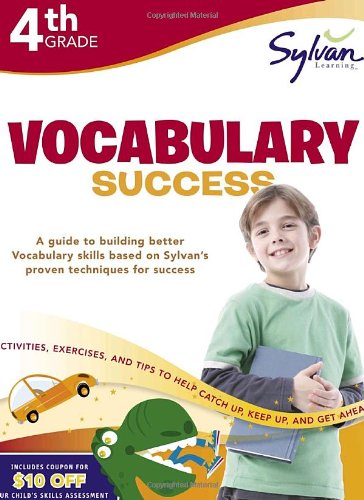
[Y635.Ebook] Free Ebook Fourth Grade Vocabulary Success (Sylvan Workbooks) (Language Arts Workbooks), by Sylvan Learning

Free Ebook Fourth Grade Vocabulary Success (Sylvan Workbooks) (Language Arts Workbooks), by Sylvan Learning

Collect the book Fourth Grade Vocabulary Success (Sylvan Workbooks) (Language Arts Workbooks), By Sylvan Learning start from currently. Yet the brand-new means is by gathering the soft documents of the book Fourth Grade Vocabulary Success (Sylvan Workbooks) (Language Arts Workbooks), By Sylvan Learning Taking the soft file can be saved or saved in computer or in your laptop computer. So, it can be greater than a book Fourth Grade Vocabulary Success (Sylvan Workbooks) (Language Arts Workbooks), By Sylvan Learning that you have. The most convenient method to reveal is that you could additionally conserve the soft file of Fourth Grade Vocabulary Success (Sylvan Workbooks) (Language Arts Workbooks), By Sylvan Learning in your appropriate and also offered gizmo. This condition will certainly suppose you too often check out Fourth Grade Vocabulary Success (Sylvan Workbooks) (Language Arts Workbooks), By Sylvan Learning in the spare times greater than talking or gossiping. It will not make you have bad habit, however it will lead you to have much better practice to check out book Fourth Grade Vocabulary Success (Sylvan Workbooks) (Language Arts Workbooks), By Sylvan Learning.

Fourth Grade Vocabulary Success (Sylvan Workbooks) (Language Arts Workbooks), by Sylvan Learning

Fourth Grade Vocabulary Success (Sylvan Workbooks) (Language Arts Workbooks), by Sylvan Learning


Fourth Grade Vocabulary Success (Sylvan Workbooks) (Language Arts Workbooks), by Sylvan Learning

Free Ebook Fourth Grade Vocabulary Success (Sylvan Workbooks) (Language Arts Workbooks), by Sylvan Learning

Fourth Grade Vocabulary Success (Sylvan Workbooks) (Language Arts Workbooks), By Sylvan Learning In fact, publication is truly a window to the globe. Also many people might not appreciate reading books; the books will certainly constantly offer the precise details regarding fact, fiction, experience, journey, politic, religion, and a lot more. We are right here a website that offers collections of books greater than guide store. Why? We offer you bunches of varieties of connect to get the book Fourth Grade Vocabulary Success (Sylvan Workbooks) (Language Arts Workbooks), By Sylvan Learning On is as you require this Fourth Grade Vocabulary Success (Sylvan Workbooks) (Language Arts Workbooks), By Sylvan Learning You could find this book conveniently here.

The factor of why you could get and get this Fourth Grade Vocabulary Success (Sylvan Workbooks) (Language Arts Workbooks), By Sylvan Learning faster is that this is guide in soft data form. You could check out the books Fourth Grade Vocabulary Success (Sylvan Workbooks) (Language Arts Workbooks), By Sylvan Learning any place you really want also you remain in the bus, office, home, as well as various other places. However, you could not should relocate or bring the book Fourth Grade Vocabulary Success (Sylvan Workbooks) (Language Arts Workbooks), By Sylvan Learning print any place you go. So, you won't have heavier bag to carry. This is why your choice making much better idea of reading Fourth Grade Vocabulary Success (Sylvan Workbooks) (Language Arts Workbooks), By Sylvan Learning is truly valuable from this instance.

Recognizing the way how to get this book Fourth Grade Vocabulary Success (Sylvan Workbooks) (Language Arts Workbooks), By Sylvan Learning is additionally valuable. You have been in ideal website to start getting this info. Get the Fourth Grade Vocabulary Success (Sylvan Workbooks) (Language Arts Workbooks), By Sylvan Learning web link that we supply right here and check out the link. You could order guide Fourth Grade Vocabulary Success (Sylvan Workbooks) (Language Arts Workbooks), By Sylvan Learning or get it when feasible. You could swiftly download this Fourth Grade Vocabulary Success (Sylvan Workbooks) (Language Arts Workbooks), By Sylvan Learning after getting deal. So, when you require the book quickly, you could straight receive it. It's so easy and so fats, isn't it? You have to favor to this way.

Just attach your device computer or device to the internet hooking up. Obtain the modern-day innovation making your downloading Fourth Grade Vocabulary Success (Sylvan Workbooks) (Language Arts Workbooks), By Sylvan Learning finished. Even you do not want to read, you can directly shut the book soft data and open Fourth Grade Vocabulary Success (Sylvan Workbooks) (Language Arts Workbooks), By Sylvan Learning it later on. You could likewise effortlessly get the book all over, considering that Fourth Grade Vocabulary Success (Sylvan Workbooks) (Language Arts Workbooks), By Sylvan Learning it remains in your gizmo. Or when remaining in the workplace, this Fourth Grade Vocabulary Success (Sylvan Workbooks) (Language Arts Workbooks), By Sylvan Learning is likewise advised to review in your computer system device.

Fourth Grade Vocabulary Success (Sylvan Workbooks) (Language Arts Workbooks), by Sylvan Learning

Solid vocabulary knowledge not only prepares fourth-graders for academic success – it makes them stronger readers. The teacher-reviewed, curriculum-based activities and exercises in this workbook will help your children catch up, keep up, and get ahead. Best of all, they’ll have lots of fun doing it! Some of the great features you’ll find inside are:

TIC-TAC-TOE
Helps kids distinguish between synonyms and antonyms. Find three synonyms or antonyms in a row, and win!

COMBO MAMBO
Reviews word roots by having kids create all the words they can from a given root.


CHOPPING BLOCKTeaches suffixes by having kids "chop off" the suffixes of words.

HOMOPHONE HOPSCOTCH
Shows different spellings of homophones by having kids fill in hopscotch boards with homophones of the same word.

PLUS!

CHECK IT! STRIPSReinforce concepts and build confidence as kids check their own work.

Give your child’s grades and confidence a boost with 4th Grade Vocabulary Success.


Why Sylvan Products Work

Sylvan Learning Workbooks won a Honors Award from the National Parenting Publications Awards (NAPPA) as a top book series for children in the elementary-aged category.�The NAPPA is the nation’s most comprehensive awards program for children’ s products and parenting resources, and has been critically reviewing products since 1990. The Award recognizes Sylvan Learning Workbooks as some of the most innovative and useful products geared to parents.

Sylvan's proven system inspires kids to learn and has helped children nationwide catch up, keep up, and get ahead in school. Sylvan has been a trusted partner for parents for thirty years, and has based their supplemental education success on programs developed through a focus on the highest educational standards and detailed research.� Sylvan’s line of educational products equips families with fun, effective, and grade-appropriate learning tools.� Our workbooks and learning kits feature activities, stories, and games to reinforce the skills children need to develop and achieve their academic potential.� Students will reap the rewards of improved confidence and a newfound love of learning.

  • Sales Rank: #231171 in Books
  • Brand: Sylvan Learning Publishing
  • Published on: 2009-01-06
  • Released on: 2009-01-06
  • Original language: English
  • Number of items: 1
  • Dimensions: 10.97" h x .39" w x 8.53" l, 1.00 pounds
  • Binding: Paperback
  • 128 pages

Review
"If you are looking for some good, fun, learning books for your child, I definitely recommend the Sylvan Learning series." -thedadjam.com

"Samantha loves these books because to her, they are not school work. They are fun activities. But really she is learning, and doing the same work she does at school."
�-Mommymandy.com

"Since I was beginning homeschooling and looking for a good 'workbook' type system for my child to learn from aside from our other homeschool activities, I decided to try it out. My son loves the workbooks." –thedomesticdiva.com

"The activities are FUN and our son doesn't realize that while he's having fun he's also learning and reinforcing what he's learned." -Shescribes.com

"My daughter has picked up some great study habits and she loves that we don't spend hours on one subject. I recommend these workbooks to everyone homeschooler or not, as they can really add to your child's learning experience." -Thedirtyshirt.com

"I love how each activity in a section connects to eachother, which allows the child to really grasp the concepts. The pages are full of interesting stories and fun activities. The workbooks also make it easy for kids to check their own work which will help them gain confidence in their skills." -Melissaclee.com

"As an early childhood teacher, I know that good reading, vocabulary, and spelling skills make an essential foundation for both academic success as well as lifelong learning.� Sylvan Learning Workbooks & Learning Kits are an awesome resource that I'd have no problem recommending to the paretns of any of my students who are struggling.� The teacher-reviewed, curriculum-based activities and exercises in these books are great for helping a child achieve success with reading, provided that they're worked through with a loving and patient adult." - TheOpinionatedParent.com


Most helpful customer reviews

5 of 5 people found the following review helpful.
Word!
By Melanie Gilbert
The late Betty Hart, a psychologist who studied school children in Kansas City, determined that by the age of 3, children raised by professional parents have heard 30 million words spoken to them.

After completing this workbook, your child will have heard 30,000,120 words, many of which are four and five syllables long like equitable and transcontinental.

To date, our family has worked our way up from the First Grade through 4th grade books. However, although several books within each grade level are progressive, particularly in the math series, young scholars can begin their Sylvan studies at any grade.

If you are new to the Sylvan style, you'll appreciate each 8-page color-coded section that covers a specific language skill, followed by a 2-page review. These challenging but inviting exercises feature word-based tic-tac-toe, crossword puzzles, word searches and scrambles, fill-in-the-blanks among a dozen other activities.

Yet, if you are Sylvan family, you'll find more of the clever and comprehensive content you've come to expect. Like ours, your young leaner will fall right into the exercises, recognizing what's expected and understanding how to bring it on home.

2 of 2 people found the following review helpful.
Great book for summer learning
By J. Robatzek
Each year I get my children the Sylvan books for the grade they just completed. They do a few pages a day to keep what they learned the past year fresh in their minds. The kids like the books, and look forward to working in them. The teachers always comment that my girls retain alot of what they did the previous year.

2 of 2 people found the following review helpful.
Very helpful.
By Jerome Hammonds
This workbook has truly engaged our granddaughter. She works diligently, for extended periods, without complaining. We especially like the repetition format where the same words are presented until she has grasped their meaning and usage.

See all 11 customer reviews...

Fourth Grade Vocabulary Success (Sylvan Workbooks) (Language Arts Workbooks), by Sylvan Learning PDF
Fourth Grade Vocabulary Success (Sylvan Workbooks) (Language Arts Workbooks), by Sylvan Learning EPub
Fourth Grade Vocabulary Success (Sylvan Workbooks) (Language Arts Workbooks), by Sylvan Learning Doc
Fourth Grade Vocabulary Success (Sylvan Workbooks) (Language Arts Workbooks), by Sylvan Learning iBooks
Fourth Grade Vocabulary Success (Sylvan Workbooks) (Language Arts Workbooks), by Sylvan Learning rtf
Fourth Grade Vocabulary Success (Sylvan Workbooks) (Language Arts Workbooks), by Sylvan Learning Mobipocket
Fourth Grade Vocabulary Success (Sylvan Workbooks) (Language Arts Workbooks), by Sylvan Learning Kindle

Fourth Grade Vocabulary Success (Sylvan Workbooks) (Language Arts Workbooks), by Sylvan Learning PDF

Fourth Grade Vocabulary Success (Sylvan Workbooks) (Language Arts Workbooks), by Sylvan Learning PDF

Fourth Grade Vocabulary Success (Sylvan Workbooks) (Language Arts Workbooks), by Sylvan Learning PDF

Jumat, 08 Oktober 2010

[F295.Ebook] PDF Download The Devil in the White City: Murder, Magic, and Madness at the Fair That Changed America, by Erik Larson

PDF Download The Devil in the White City: Murder, Magic, and Madness at the Fair That Changed America, by Erik Larson

Now, how do you understand where to buy this e-book The Devil In The White City: Murder, Magic, And Madness At The Fair That Changed America, By Erik Larson Never mind, now you may not visit guide establishment under the intense sun or evening to look the publication The Devil In The White City: Murder, Magic, And Madness At The Fair That Changed America, By Erik Larson We below consistently help you to find hundreds kinds of publication. Among them is this e-book entitled The Devil In The White City: Murder, Magic, And Madness At The Fair That Changed America, By Erik Larson You could visit the link web page provided in this collection and after that go with downloading and install. It will not take even more times. Simply link to your website accessibility and also you could access guide The Devil In The White City: Murder, Magic, And Madness At The Fair That Changed America, By Erik Larson online. Obviously, after downloading and install The Devil In The White City: Murder, Magic, And Madness At The Fair That Changed America, By Erik Larson, you may not publish it.

The Devil in the White City: Murder, Magic, and Madness at the Fair That Changed America, by Erik Larson

The Devil in the White City: Murder, Magic, and Madness at the Fair That Changed America, by Erik Larson


The Devil in the White City: Murder, Magic, and Madness at the Fair That Changed America, by Erik Larson

PDF Download The Devil in the White City: Murder, Magic, and Madness at the Fair That Changed America, by Erik Larson

Excellent The Devil In The White City: Murder, Magic, And Madness At The Fair That Changed America, By Erik Larson publication is constantly being the best good friend for spending little time in your workplace, night time, bus, and also all over. It will certainly be a good way to merely look, open, and also review guide The Devil In The White City: Murder, Magic, And Madness At The Fair That Changed America, By Erik Larson while in that time. As known, encounter and skill don't always included the much money to acquire them. Reading this book with the title The Devil In The White City: Murder, Magic, And Madness At The Fair That Changed America, By Erik Larson will allow you understand more points.

Why should be book The Devil In The White City: Murder, Magic, And Madness At The Fair That Changed America, By Erik Larson Publication is one of the easy sources to try to find. By obtaining the writer and theme to get, you can discover a lot of titles that supply their data to get. As this The Devil In The White City: Murder, Magic, And Madness At The Fair That Changed America, By Erik Larson, the impressive publication The Devil In The White City: Murder, Magic, And Madness At The Fair That Changed America, By Erik Larson will certainly provide you just what you should cover the work deadline. As well as why should remain in this website? We will ask initially, have you a lot more times to go with shopping the books and hunt for the referred book The Devil In The White City: Murder, Magic, And Madness At The Fair That Changed America, By Erik Larson in publication store? Many individuals might not have enough time to discover it.

Thus, this site presents for you to cover your trouble. We reveal you some referred books The Devil In The White City: Murder, Magic, And Madness At The Fair That Changed America, By Erik Larson in all kinds and also motifs. From typical writer to the famous one, they are all covered to give in this website. This The Devil In The White City: Murder, Magic, And Madness At The Fair That Changed America, By Erik Larson is you're searched for book; you just should visit the link page to show in this website then choose downloading and install. It will certainly not take sometimes to obtain one publication The Devil In The White City: Murder, Magic, And Madness At The Fair That Changed America, By Erik Larson It will certainly rely on your web connection. Merely acquisition and also download and install the soft data of this book The Devil In The White City: Murder, Magic, And Madness At The Fair That Changed America, By Erik Larson

It is so very easy, isn't it? Why don't you try it? In this site, you could additionally discover various other titles of the The Devil In The White City: Murder, Magic, And Madness At The Fair That Changed America, By Erik Larson book collections that may be able to help you discovering the very best solution of your job. Reading this book The Devil In The White City: Murder, Magic, And Madness At The Fair That Changed America, By Erik Larson in soft file will certainly additionally ease you to obtain the source easily. You could not bring for those books to someplace you go. Just with the gizmo that constantly be with your almost everywhere, you can read this publication The Devil In The White City: Murder, Magic, And Madness At The Fair That Changed America, By Erik Larson So, it will be so promptly to finish reading this The Devil In The White City: Murder, Magic, And Madness At The Fair That Changed America, By Erik Larson

The Devil in the White City: Murder, Magic, and Madness at the Fair That Changed America, by Erik Larson

Erik Larson—author of #1 bestseller In the Garden of Beasts—intertwines the true tale of the 1893 World's Fair and the cunning serial killer who used the fair to lure his victims to their death. Combining meticulous research with nail-biting storytelling, Erik Larson has crafted a narrative with all the wonder of newly discovered history and the thrills of the best fiction.

  • Sales Rank: #565 in Books
  • Brand: Larson, Erik
  • Published on: 2004-02-10
  • Released on: 2004-02-10
  • Original language: English
  • Number of items: 1
  • Dimensions: 7.98" h x .94" w x 5.16" l, .97 pounds
  • Binding: Paperback
  • 447 pages
Features
  • Chicago Exposition
  • Nineteenth Century
  • True Crime
  • Serial Killer
  • Thriller

Amazon.com Review
Author Erik Larson imbues the incredible events surrounding the 1893 Chicago World's Fair with such drama that readers may find themselves checking the book's categorization to be sure that The Devil in the White City is not, in fact, a highly imaginative novel. Larson tells the stories of two men: Daniel H. Burnham, the architect responsible for the fair's construction, and H.H. Holmes, a serial killer masquerading as a charming doctor. Burnham's challenge was immense. In a short period of time, he was forced to overcome the death of his partner and numerous other obstacles to construct the famous "White City" around which the fair was built. His efforts to complete the project, and the fair's incredible success, are skillfully related along with entertaining appearances by such notables as Buffalo Bill Cody, Susan B. Anthony, and Thomas Edison. The activities of the sinister Dr. Holmes, who is believed to be responsible for scores of murders around the time of the fair, are equally remarkable. He devised and erected the World's Fair Hotel, complete with crematorium and gas chamber, near the fairgrounds and used the event as well as his own charismatic personality to lure victims. Combining the stories of an architect and a killer in one book, mostly in alternating chapters, seems like an odd choice but it works. The magical appeal and horrifying dark side of 19th-century Chicago are both revealed through Larson's skillful writing. --John Moe

From Publishers Weekly
This is a steady performance of a book that, while gripping in its content and crisply paced, isn't quite a gold mine for an audio performer. It relies on journalistic narration and includes almost no quotes, so there isn't much chance for interesting characterization. But it is excellent nonfiction, chronicling the hurly-burly planning and construction of the 1893 Chicago World's Fair (which did, as the title suggests, include building what amounted to an entire city) and a cruelly calculating sociopath who used the event's tumult and crowds to serve his homicidal compulsion. Goldwyn is an experienced narrator with a keen dramatic sense, and his resonant voice is well-suited to the project. Music is used only sparingly, but the few subdued, creepy bars Goldwyn reads over in the beginning do an excellent job of creating atmosphere for a tale that is subtle but often genuinely unsettling. Listeners will also be fascinated by descriptions of the sheer logistics of the fair itself, which serve as not only carefully crafted and informative history, but also as welcome breaks from the macabre and relentless contrivances of the killer. In all, it's a polished presentation of an intriguing book that outlines the heights of human imagination and perseverance against the depths of our depravity.
Copyright 2003 Reed Business Information, Inc.

From Booklist
*Starred Review* Larson's ambitious, engrossing tale of the Chicago World's Fair of 1893 focuses primarily on two men: Daniel H. Burnham, the architect who was the driving force behind the fair, and Henry H. Holmes, a sadistic serial killer working under the cover of the busy fair. After the 1889 French Exposition Universel wowed the world with the Eiffel Tower and high attendance numbers, interest began to grow in the U.S. for a similar fair. Chicago and New York were the top contenders for the location, and in February 1890, Chicagoans were overjoyed to hear they had won the honor. Burnham and his partner, John Root, the leading architects in Chicago, were tapped for the job, and they in turn called on Frederick Law Olmstead, Louis Sullivan, and Richard M. Hunt to help them build the world's greatest fair. They faced overwhelming obstacles: inhospitable weather, bureaucracy, illness, and even death. Unbeknownst to any of them, Holmes, a charismatic, handsome doctor, had arrived in the city and built a complex with apartments, a drugstore, and a vault, which he used to trap his victims until they suffocated. When the White City opened for business in May 1893, hundreds of thousands of people flocked to it, although a plummeting economy and several accidents did nothing to help business. A shocking murder concludes the ultimately successful fair, and that's before Holmes claims his final victims in the cruelest act of his career. A magnificent book. Kristine Huntley
Copyright � American Library Association. All rights reserved

Most helpful customer reviews

3 of 3 people found the following review helpful.
Disappointing
By Chris Montana
There was much detail about the Chicago Worlds Fair, but very little about the first documented serial killer in America, Herman Webster Mudgett (Dr. Henry Howard Holmes). There was little detail in the book about this man, his life, his crimes and his particular brand of psychopath. He was an extremely interesting monster that was treated almost as an afterthought to the main subject of the fair. He should have been the main focus of the story and the fair used as a backdrop to his crimes. H. H. Holmes was not like any other serial killer. He was and still is the nebulous monster in the shadows we all fear. In short, if you are thinking this book is about a serial killer gathering his victims during the Chicago Worlds Fair, you are wrong. It is about the Fair being secretly used by a prolific serial killer to satisfy his bloodlust. The movie based on this book is supposed to release next year. I can only hope it gives Dr. Holmes and his crimes center stage and delves into who and what he really was as far as pure psychopaths can be. Having said that, the book was well written and quite interesting. I gave it 3 stars only for this reason. If the author had made a much greater effort to 'flesh-out' Holmes and make him the focus of the book instead of the fair I might have felt five stars had been earned.

2 of 2 people found the following review helpful.
I loved this book
By AshSamuelson
Where to start? I loved this book! *May contain spoilers* This novel was filled with history, challenges, hope, and murder. The writing began slowly but drew me in after getting past the first couple chapters. However, those chapters were key for setting the scene and getting to know each character (as all books do). The description of how the Fair came to be, was built, and impacted Chicago was fascinating. During the building of the Fair my favorite part was guessing what item became their "master work" to outshine Eiffel's Tower. I was not familiar with Chicago's Fair or it's background before this book, the final piece chosen was a fun mystery to guess as the architects also worked to discover it. The portions of the novel regarding H.H. Holmes and the murders he partook in were sickening. Had Holmes' history not been included into the novel I would have found the Fair alone to be less engaging. I think this portion kept me drawn in and wondering how he would be caught. The author's references and notes towards the end of the book are extensive. This is another piece that made me love this novel. His research provided endless historical proof to create the flowing piece he created. It was hard at times to remember this was based on real events because the events related to Holmes were gut wrenching. Something a fictional character, a bad guy would do. The challenges the architects encountered before and after the Fair was built were rough. They placed so much hope into the Fair changing the world's view of Chicago that it almost destroyed them. Their health, families and happiness were greatly impacted. I hope to reread this novel many times. I feel I learned so much, but missed a lot as well. With so much information packed into the story I bet a second or third read will benefit me in catching something I missed. Definitely a five out of five star. Recommending to everyone I know. A new favorite!

6 of 6 people found the following review helpful.
Riveting
By Cindyo
Two stories juxtaposed around the 1893 Chicago Columbian Exposition, that of the gifted young creator, architect Daniel Burnham, who designed and built the breathtakingly beautiful White City, and psychotic destroyer H. H. Holmes, the serial killer who took advantage of the draw of the White City to victimize young woman visitors to Chicago. Both stories are riveting, covering in detail the labors of each man, one struggling to build the White City itself and the other a "hotel" near the fair grounds, designed to make efficient the murder and disposal of young visitors. In between, you're treated to the spectacle of watching an entire major city being designed and built, skyscraper by skyscraper, on the ashes of a fire that swept through and destroyed the old city two decades prior. You don't have to be a Chicagoan to find this book hard to put down and impossible to forget. One of the best books I've ever read.

See all 4960 customer reviews...

The Devil in the White City: Murder, Magic, and Madness at the Fair That Changed America, by Erik Larson PDF
The Devil in the White City: Murder, Magic, and Madness at the Fair That Changed America, by Erik Larson EPub
The Devil in the White City: Murder, Magic, and Madness at the Fair That Changed America, by Erik Larson Doc
The Devil in the White City: Murder, Magic, and Madness at the Fair That Changed America, by Erik Larson iBooks
The Devil in the White City: Murder, Magic, and Madness at the Fair That Changed America, by Erik Larson rtf
The Devil in the White City: Murder, Magic, and Madness at the Fair That Changed America, by Erik Larson Mobipocket
The Devil in the White City: Murder, Magic, and Madness at the Fair That Changed America, by Erik Larson Kindle

The Devil in the White City: Murder, Magic, and Madness at the Fair That Changed America, by Erik Larson PDF

The Devil in the White City: Murder, Magic, and Madness at the Fair That Changed America, by Erik Larson PDF

The Devil in the White City: Murder, Magic, and Madness at the Fair That Changed America, by Erik Larson PDF

Selasa, 05 Oktober 2010

[W524.Ebook] Fee Download Pre-Suasion: A Revolutionary Way to Influence and Persuade, by Robert Cialdini

Fee Download Pre-Suasion: A Revolutionary Way to Influence and Persuade, by Robert Cialdini

Simply for you today! Discover your favourite publication here by downloading and install as well as obtaining the soft data of the e-book Pre-Suasion: A Revolutionary Way To Influence And Persuade, By Robert Cialdini This is not your time to traditionally likely to guide establishments to get an e-book. Right here, varieties of e-book Pre-Suasion: A Revolutionary Way To Influence And Persuade, By Robert Cialdini as well as collections are readily available to download and install. Among them is this Pre-Suasion: A Revolutionary Way To Influence And Persuade, By Robert Cialdini as your preferred publication. Getting this e-book Pre-Suasion: A Revolutionary Way To Influence And Persuade, By Robert Cialdini by online in this site could be recognized now by going to the web link page to download and install. It will certainly be easy. Why should be below?

Pre-Suasion: A Revolutionary Way to Influence and Persuade, by Robert Cialdini

Pre-Suasion: A Revolutionary Way to Influence and Persuade, by Robert Cialdini


Pre-Suasion: A Revolutionary Way to Influence and Persuade, by Robert Cialdini

Fee Download Pre-Suasion: A Revolutionary Way to Influence and Persuade, by Robert Cialdini

What do you do to start reading Pre-Suasion: A Revolutionary Way To Influence And Persuade, By Robert Cialdini Searching guide that you enjoy to review first or locate an appealing publication Pre-Suasion: A Revolutionary Way To Influence And Persuade, By Robert Cialdini that will make you wish to check out? Everyone has distinction with their factor of reading an e-book Pre-Suasion: A Revolutionary Way To Influence And Persuade, By Robert Cialdini Actuary, checking out behavior must be from earlier. Lots of people might be love to check out, but not an e-book. It's not mistake. Somebody will certainly be burnt out to open up the thick publication with little words to review. In more, this is the real problem. So do happen most likely with this Pre-Suasion: A Revolutionary Way To Influence And Persuade, By Robert Cialdini

The means to obtain this publication Pre-Suasion: A Revolutionary Way To Influence And Persuade, By Robert Cialdini is very easy. You could not go for some areas and spend the time to just locate guide Pre-Suasion: A Revolutionary Way To Influence And Persuade, By Robert Cialdini As a matter of fact, you may not consistently obtain the book as you want. Yet below, just by search as well as locate Pre-Suasion: A Revolutionary Way To Influence And Persuade, By Robert Cialdini, you can obtain the lists of the books that you really expect. In some cases, there are several books that are showed. Those books obviously will amaze you as this Pre-Suasion: A Revolutionary Way To Influence And Persuade, By Robert Cialdini compilation.

Are you considering mostly books Pre-Suasion: A Revolutionary Way To Influence And Persuade, By Robert Cialdini If you are still confused on which of the book Pre-Suasion: A Revolutionary Way To Influence And Persuade, By Robert Cialdini that ought to be purchased, it is your time to not this website to search for. Today, you will certainly require this Pre-Suasion: A Revolutionary Way To Influence And Persuade, By Robert Cialdini as the most referred publication as well as a lot of required publication as sources, in various other time, you can appreciate for some other publications. It will certainly depend on your willing requirements. However, we constantly recommend that publications Pre-Suasion: A Revolutionary Way To Influence And Persuade, By Robert Cialdini can be a terrific problem for your life.

Also we talk about guides Pre-Suasion: A Revolutionary Way To Influence And Persuade, By Robert Cialdini; you may not locate the printed books here. A lot of collections are provided in soft data. It will precisely give you a lot more benefits. Why? The first is that you could not have to lug the book almost everywhere by fulfilling the bag with this Pre-Suasion: A Revolutionary Way To Influence And Persuade, By Robert Cialdini It is for the book is in soft data, so you can wait in gizmo. Then, you could open up the gadget anywhere as well as review the book effectively. Those are some few benefits that can be got. So, take all advantages of getting this soft documents book Pre-Suasion: A Revolutionary Way To Influence And Persuade, By Robert Cialdini in this website by downloading and install in link offered.

Pre-Suasion: A Revolutionary Way to Influence and Persuade, by Robert Cialdini

“Best Business Books of 2016” —Financial Times

Inc.com’s Geoffrey James Names Pre-Suasion Best Sales and Marketing Book of 2016

NEW YORK TIMES BESTSELLER
WALL STREET JOURNAL BESTSELLER

The author of the legendary bestseller Influence, social psychologist Robert Cialdini shines a light on effective persuasion and reveals that the secret doesn’t lie in the message itself, but in the key moment before that message is delivered.

What separates effective communicators from truly successful persuaders? Using the same combination of rigorous scientific research and accessibility that made his Influence an iconic bestseller, Robert Cialdini explains how to capitalize on the essential window of time before you deliver an important message. This “privileged moment for change” prepares people to be receptive to a message before they experience it. Optimal persuasion is achieved only through optimal pre-suasion. In other words, to change “minds” a pre-suader must also change “states of mind.”

His first solo work in over thirty years, Cialdini’s Pre-Suasion draws on his extensive experience as the most cited social psychologist of our time and explains the techniques a person should implement to become a master persuader. Altering a listener’s attitudes, beliefs, or experiences isn’t necessary, says Cialdini—all that’s required is for a communicator to redirect the audience’s focus of attention before a relevant action.

From studies on advertising imagery to treating opiate addiction, from the annual letters of Berkshire Hathaway to the annals of history, Cialdini draws on an array of studies and narratives to outline the specific techniques you can use on online marketing campaigns and even effective wartime propaganda. He illustrates how the artful diversion of attention leads to successful pre-suasion and gets your targeted audience primed and ready to say, “Yes.”

  • Sales Rank: #581001 in Books
  • Published on: 2016
  • Original language: English
  • Number of items: 3
  • Dimensions: 9.21" h x 1.18" w x 6.02" l, 1.68 pounds
  • Binding: Paperback

Review
"The great social psychologist Robert Cialdini has written another timeless and indispensable book about the psychology of influence. I'll be recommending it for years and years."—Amy Cuddy, Associate Professor of Business Administration at Harvard Business School, and author of Presence

"Extends the science of persuasion in several important ways....an essential tool for anyone serious about science-based business strategies. Pre-Suasion is well worth the long wait, and is destined to be an instant classic. The book belongs on the shelf of anyone in business, from the CEO to the newest salesperson."—Forbes

"An utterly fascinating read on how the most important drivers of persuasion aren't the words we choose in the moment, but how we set the stage beforehand. Robert Cialdini is the world's foremost expert on influence, and you will never look at it the same way again."—Adam Grant, professor of Management and Psychology at the Wharton School, and author of Originals and Give and Take

"Digging down into how people make decisions at a primitive level is the specialty of author Robert Cialdini, a guru to salesmen and marketers since the publication of his 1984 book Influence. In his new book Pre-Suasion: A Revolutionary Way to Influence and Persuade, he returns with more tips about how to slither your way into people’s minds and rearrange what you find there.”—New York Post

"No psychologist’s research has been used more often or successfully than that of Robert Cialdini, who literally “wrote the book” on influence. Now, he’s done it again, showing us the power of the moment before an attempt to persuade. This is classic Cialdini—authoritative, original, and immediately practical."—Richard H. Thaler, Charles R. Walgreen Distinguished Service Professor of Behavioral Science and Economics at The University of Chicago Booth School of Business, co-author of Nudge, and author of Misbehaving

"Robert Cialdini's Influence is, by a wide margin, the book that I recommend most often. Pre-Suasion may be even more shockingly insightful."—Chip Heath, Professor of Organizational Behavior at Stanford Graduate School of Business, and co-author of Switch and Made to Stick

"[Pre-Suasion] is sure to be an important contribution to the fields of social psychology and behavioral economics...detailed, readable, and fascinating, this book may cause the reader to wonder whether unbiased decisions are possible."—Publishers Weekly

“A fascinating and engaging glimpse into the world of persuasion, and it’s a lot more pervasive and evanescent than we might think.”—BizEd

"Books employing social science are very popular these days, but so are books on workplace culture. Pre-Suasion reminds us that there is a connection between the two, that using insights from behavioral science and social psychology can yield huge dividends if used accordingly and ethically."—800CEOREAD

“Exhaustively reviews the research not on how to influence others but on how to make people ready to be influenced….chapter after chapter piles on the experimental evidence from the field and the lab….Scholars, teachers and researchers will find the endnotes invaluable, because here, with his usual clarity and charm, Mr. Cialdini addresses academic concerns—such as the debate about the persistence and strength of change that can be produced in a brief lab study or field intervention—and explains many studies in detail, with more anecdotes to illustrate them….the overall message of this book is compelling.”—The Wall Street Journal

"Fascinating and useful read. An instant classic."—Michael Mauboussin

"Robert Cialdini is perhaps the foremost expert on effective persuasion....Cialdini’ s latest book, Pre-Suasion, builds on that work, arguing that the best persuaders aren’t merely eloquent charmers with well- crafted, finely tuned arguments; they’re also creative preparers who focus on finding the best ways to launch their offers and ideas....The book provides a vast catalogue of research and techniques, many of them marketing related."—HARVARD BUSINESS REVIEW

“Best Sales and Marketing Book of 2016.”—Geoffrey James, Inc.com

About the Author
Robert Cialdini is recognized worldwide for his inspired field research on the psychology of influence. He is a New York Times bestselling author. His books, including Influence, have sold more than three million copies in thirty-three languages. Dr. Cialdini is Regents’ Professor Emeritus of Psychology and Marketing at Arizona State University and the president and CEO of Influence at Work, an international company that provides keynotes and influence training on how to use the lessons in Dr. Cialdini’s books ethically and effectively.

Excerpt. © Reprinted by permission. All rights reserved.
Pre-Suasion

PRE-SUASION: An Introduction
As a kind of secret agent, I once infiltrated the training programs of a broad range of professions dedicated to getting us to say yes. For almost three years, I recorded the lessons taught to aspiring automobile salespeople, direct marketers, TV advertisers, frontline managers, charity fund-raisers, public relations specialists, and corporate recruiters. My intent was to find out which practices worked time after time. So I answered the organizations’ ads for trainees or otherwise arranged to be present in their classrooms, notebook in hand, ready to absorb the wisdom born of long-standing experience in the business of persuasion.

In these programs, advanced trainees were often allowed to accompany and observe an old pro who was conducting business. I always jumped at those opportunities because I wanted to see if I could register not just what practitioners in general did to succeed but also what the best of them did. One such practice quickly surfaced that shook my assumptions. I’d expected that the aces of their professions would spend more time than the inferior performers developing the specifics of their requests for change: the clarity, logic, and desirable features of them. That’s not what I found.
PRE-SUASION
The highest achievers spent more time crafting what they did and said before making a request. They set about their mission as skilled gardeners who know that even the finest seeds will not take root in stony soil or bear fullest fruit in poorly prepared ground. They spent much of their time toiling in the fields of influence thinking about and engaging in cultivation—in ensuring that the situations they were facing had been pretreated and readied for growth. Of course, the best performers also considered and cared about what, specifically, they would be offering in those situations. But much more than their less effective colleagues, they didn’t rely on the legitimate merits of an offer to get it accepted; they recognized that the psychological frame in which an appeal is first placed can carry equal or even greater weight.

Besides, they were frequently in no position to tinker with the merits of what they had to offer; someone else in the organization had created the product, program, or plan they were recommending, often in fixed form. Their responsibility was to present it most productively. To accomplish that, they did something that gave them a singular kind of persuasive traction: before introducing their message, they arranged to make their audience sympathetic to it.

There’s a critical insight in all this for those of us who want to learn to be more influential. The best persuaders become the best through pre-suasion—the process of arranging for recipients to be receptive to a message before they encounter it. To persuade optimally, then, it’s necessary to pre-suade optimally. But how?

In part, the answer involves an essential but poorly appreciated tenet of all communication: what we present first changes the way people experience what we present to them next. Consider how a small procedural difference has improved the bottom line of the consulting business of a Toronto-based colleague of mine. For years, when bidding on a big project, it wasn’t unusual to get price resistance from the client, who might propose a 10 percent or 15 percent reduction. That was frustrating, he says, because he never felt comfortable padding the budget to cover this kind of potential pushback on costs. If he did agree to the cut, his profit margin became so thin it barely paid to take the business. If he didn’t acquiesce, he either lost the job or produced partners who were initially disgruntled because he wasn’t willing to work with them on price.

Then, during one proposal meeting, he accidentally hit upon a maneuver that rid him of the problem forever. It wasn’t a step-by-step attempt to specify or justify each of the expenses involved in his services; he’d long since given up on that approach, which only brought scrutiny to the bill. Instead, after his standard presentation and just before declaring his ($75,000) fee, he joked, “As you can tell, I’m not going to be able to charge you a million dollars for this.” The client looked up from the written proposal he’d been studying and said, “Well, I can agree to that!” The meeting proceeded without a single subsequent reference to compensation and ended with a signed contract. My colleague claims that this tactic of mentioning an admittedly unrealistic price tag for a job doesn’t always win the business—too many other factors are involved for that—but it almost always eliminates challenges to the charges.

Although he stumbled onto it, my friend is not alone in experiencing the remarkable effects of merely launching a large number into the air and, consequently, into the minds of others. Researchers have found that the amount of money people said they’d be willing to spend on dinner went up when the restaurant was named Studio 97, as opposed to Studio 17; that the price individuals would pay for a box of Belgian chocolates grew after they’d been asked to write down a pair of high (versus low) digits from their Social Security numbers; that participants in a study of work performance predicted their effort and output would be better when the study happened to be labeled experiment twenty-seven (versus experiment nine); and that observers’ estimates of an athlete’s performance increased if he wore a high (versus low) number on his jersey.

What’s more, the potent impact of what goes first isn’t limited to big initial numbers. Other researchers have shown that just after drawing a set of long lines on a sheet of paper, college students estimated the length of the Mississippi River as much greater than those who had just drawn a set of short lines. In fact, the impact of what goes first isn’t limited to numerics at all: customers in a wine shop were more likely to purchase a German vintage if, before their choice, they’d heard a German song playing on the shop’s sound system; similarly, they were more likely to purchase a French vintage if they’d heard a French song playing.2

So it’s not one particular experience that guides what’s done later. It can be exposure to a number, the length of a line, or a piece of music; and, as we will see in later chapters, it can be a brief burst of attention to any of a variety of selected psychological concepts. But, because this book is mainly about the things that enhance persuasion, those chapters give special treatment to the concepts that most elevate the likelihood of assent. It’s important here to take note of my choice of the word likelihood, which reflects an inescapable reality of operating in the realm of human behavior—claims of certainties in that province are laughable. No persuasive practice is going to work for sure whenever it is applied. Yet there are approaches that can consistently heighten the probability of agreement. And that is enough. A meaningful increase in those odds is enough to gain a decisive advantage.

In the home, it’s enough to give us the means to get greater compliance with our wishes—even from that most resistant of all audiences: our children. In business, it’s enough to give organizations that implement these approaches the means to outpace their rivals—even rivals with equally good cases to make. It’s also enough to give those who know how to employ these approaches the means to become better, even best, performers within an organization.

Take, for instance, one such best performer (we can call him Jim because, what the heck, that was his name) who worked for a firm whose training program I had entered to study. The company made expensive, heat-activated fire alarm systems for the home, and Jim was its top salesperson. He didn’t win every sale, of course, but the likelihood that he would emerge from a sales call with a signed contract was, month after month, better than his counterparts’. After an initial period of classroom instruction, I was assigned to spend the next several days accompanying various salespeople, to learn how they approached the selling process. This always involved an in-home visit to a family that had scheduled an appointment for a presentation.

On account of his star status, I looked closely at Jim’s technique. One practice stood out as central to his success. Before beginning his sales effort, he established an aura of trust with the family. Trust is one of those qualities that leads to compliance with requests, provided that it has been planted before the request is made. Despite the mountains of scientific reports and scores of books that have been written making that point and suggesting ways to achieve trust, Jim accomplished it in a fashion I’ve not seen in any of them. He did it by pretending to be a bit of a screwup.

The sales sequence taught to all company representatives was fairly standard to the industry. After making small talk to build rapport, the prospects (usually a couple) were given a timed ten-minute written test of fire safety knowledge designed to reveal how little they knew about the actual dangers of a home fire. Then, at the completion of the test, representatives began the active sales pitch by demonstrating the alarm system and walking prospects through a book of materials documenting the system’s superiority to all others. Everyone else brought the book into the house from the start and kept it close by, ready for use. Not Jim, though. He would wait until a couple had begun taking the knowledge test, when he’d slap his forehead and say, “Oh, I forgot some really important information in my car, and I need to get it. I don’t want to interrupt the test; so, would you mind if I let myself out and back into your home?” The answer was always some form of “Sure, go ahead.” Oftentimes it required giving him a door key.

I watched Jim make three presentations. Each time, his “forgetfulness” surfaced in the same way and at the same point. On the drive back to the office later that evening, I asked him about it. Twice, he wouldn’t give me a straight answer, annoyed that I was pressing to discover his selling secret. But when I persisted, he blurted, “Think, Bob: Who do you let walk in and out of your house on their own? Only somebody you trust, right? I want to be associated with trust in those families’ minds.”

It was a brilliant trick—not an entirely ethical one, but brilliant nonetheless—because it embodied one of the central assertions of this book: the truly influential things we say and do first act to pre-suade our audience, which they accomplish by altering audience members’ associations with what we do or say next. In chapter 7, I will forward the argument that all mental activity arises as patterns of associations within a vast and intricate neural network, and that influence attempts will be successful only to the extent that the associations they trigger are favorable to change.

Jim’s tactic provides a good illustration. To become a top salesperson, he didn’t have to modify the features of the alarm system he was selling or the logic, wording, or style of how he portrayed it; in fact, he didn’t stray from the standard presentation at all. Instead, he only had to first become associated with the concept of trust, the (intensely positive) other associations of which would then become linked to him and his advice. Even Jim’s unorthodox method of connecting himself to the concept of trust was purely associative. He didn’t claim to be the sort of individual—a close friend or family member, perhaps—that people let have open access to their homes. He just arranged to be treated in way characteristic of trusted individuals of this sort. It’s noteworthy that this tactic was the only real difference I registered between Jim’s presentations and those of his significantly less successful coworkers. Such is the strength of mere association.

All told, there are any of a number of first steps, besides establishing trust, persuaders can take that will make audiences more receptive to the case they intend to present. The steps can take multiple forms, and, accordingly, they’ve been given multiple labels by behavioral scientists. They can be called frames or anchors or primes or mindsets or first impressions. We will encounter each of those types in the remainder of these pages, where, throughout, I’m going to refer to them as openers—because they open up things for influence in two ways. In the first, they simply initiate the process; they provide the starting points, the beginnings of persuasive appeals. But it is in their second function that they clear the way to persuasion, by removing existing barriers. In that role, they promote the openings of minds and—for would-be persuaders like Jim—of protectively locked doors.3
THE BIG SAME
There’s a joke I’ve heard influence practitioners tell about the difficulties of persuading prospects to move in a desired direction. It tracks an exchange between the sales representative of a marketing firm and a potential client who wants to bring out a new brand of frozen spinach.

Client: Do you have experience marketing new food products?

Sales rep: We have quite a lot of experience there.

Client: Does that include experience in selling frozen food?

Sales rep: Yes, it does.

Client: How about frozen vegetables?

Sales rep: We’ve brought several types to market over the years.

Client: Spinach?

Sales rep: Actually, yes, spinach too.

Client [leaning forward now, voice straining in anticipation]: Whole leaf . . . or chopped?

At business conferences, the joke produces knowing, derisive laughter from the influence professionals who hear it. Of course it was never funny the times the joke was on them—when they’d lost a contract or sale because a prospective customer, caught up in some detail of a difference, missed the big picture of what they had to offer. The contemptuous reaction to the joke’s punch line always struck me as odd, because I had found persuasion practitioners guilty of the same kind of narrowness—not in meetings with a customer or client but in the training sessions designed to prepare them for those meetings.

It wasn’t long after I began operating undercover in the training classes of influence practitioners that I encountered something curious: participants in the sessions were nearly always informed that persuasion had to be approached differently in their particular profession than in related professions. When it comes to swaying people, advertising works differently than marketing; marketing works differently than fund-raising; fund-raising works differently than public relations; public relations works differently than lobbying; lobbying works differently than recruitment. And so on.

What’s more, distinctions were stressed even within professions. Selling whole life insurance is different from selling term insurance; selling trucks is different from selling cars; selling by mail or online is different from selling in stores; selling products is different from selling services; selling to an individual is different from selling to a business; selling wholesale is different from selling retail.

It’s not that the trainers were wrong in distinguishing their own bailiwick from those of their professional neighbors. But this steady referencing of their uniqueness led to a pair of lapses in judgment. First, they often detoured into distinctions of little consequence. Worse, in their emphasis on what’s different among the successful persuasion professions, they didn’t focus enough on an extraordinarily useful other question: What’s the same?

This oversight seemed a serious failing because if trainees could indeed be shown what proved convincing across the widest set of influence situations, it would help them win the day in all manner of circumstances, novel and familiar. If they could indeed be educated to understand and employ the universal principles that undergird effective persuasion, the details of the change they were hoping to generate wouldn’t matter. They would do swimmingly whether their influence attempt involved wholesale or retail, whole life or term, whole leaf or chopped.4

My goal during those times spent scrutinizing commercial training programs, then, was to discover what lies in parallel beneath all the truly superior professional approaches to influence. A driving question for me throughout that nearly three-year period was, “What do these approaches have in common to make them work so well?” The limited footprint of the answer that emerged surprised me. I identified only six psychological principles that appeared to be deployed routinely in long-prospering influence businesses. I’ve claimed that the six—reciprocation, liking, social proof, authority, scarcity, and consistency—represent certain psychological universals of persuasion; and I’ve treated each, one per chapter, in my earlier book, Influence.
THE BIG DIFFERENCE
In a portion of Pre-Suasion, I have tried to make instructive contact with those principles again while taking an important change in direction. The earlier book was written to inform consumers how to resist influence attempts employed in an undue or unwelcome way. One factor that spurred me to write this book is that, although Influence has now appeared in multiple editions and sold more copies than I could have sensibly imagined, few consumer groups ever contacted me for follow-up. But my phone hasn’t stopped ringing with requests from two other types of callers: corporate representatives inviting me to speak to their groups and individual readers wanting to know how to become more influential in everyday interactions with coworkers, friends, neighbors, and family members. It became plain that, more than just learning how to deflect or reject it, large numbers of people are ravenously interested in learning how to harness persuasion.

In contrast to Influence, one aim of this book is to help satisfy that hunger directly, but with a pair of dietary restrictions. The first concerns the ethics of persuasive success. Just because we can use psychological tactics to gain consent doesn’t mean we are entitled to them. The tactics are available for good or ill. They can be structured to fool and thereby exploit others. But they can also be structured to inform and thereby enhance others. Chapter 13 offers a rationale—beyond the traditional one based on the economic consequences of a damaged reputation—for why organizations should steer sharply away from unethical persuasive practices: those practices will lend themselves to the attraction and retention of employees who find cheating acceptable and who will ultimately cheat the organization as a consequence.

This book also abides by a second stipulation. Although the material should be seasoned liberally with personal illustrations and accounts, the meat of the evidence has to be scientifically based. In any effort to manage the influence process successfully, a scientifically grounded approach provides a real advantage. Traditionally, persuasion has been viewed as an elusive art; the province of those few with an intuitive grasp of how to turn a phrase just so. But something radical has happened to the study of persuasion during the past half century that permits the rest of us to benefit as fully as the born masters.

Researchers have been applying a rigorous scientific approach to the question of which messages lead people to concede, comply, and change. They have documented the sometimes staggering impact of making a request in a standard way versus making the identical request in a different, better-informed fashion. Besides the sheer impact of the obtained effects, there is another noteworthy aspect of the results: the process of persuasion is governed by psychological laws, which means that similar procedures can produce similar results over a wide range of situations.

And, if persuasion is lawful, it is—unlike artistic inspiration—learnable. Whether possessed of an inherent talent for influence or not, whether insightful about the methods or not, whether a gifted artisan of the language or not, it is possible to learn scientifically established techniques that allow any of us to be more influential.5


Importantly different from Influence is the science-based evidence of not just what best to say to persuade but also when best to say it. From that evidence, it is possible to learn how to recognize and monitor the natural emergence of opportune moments of influence. It is also possible (but more perilous, from an ethical standpoint) to learn how to create—to make—those moments. Whether operating as a moment monitor or a moment maker, the individual who knows how to time a request, recommendation, or proposal properly will do exceedingly well.
IT’S ABOUT TIME(ING)
It’s about time that I finished this book that is in one sense about timing; in fact, it’s several years late. I intended to write it while away from my home university during a leave of absence at a well-known business school. There, I figured, I’d have access to knowledgeable colleagues who could help me think about relevant issues, as well as an uncluttered calendar that would allow me the blocks of time I needed to write.

A month or so before I was to relocate, I was negotiating with the associate dean about certain aspects of my visit that stood to make it more fruitful—an office near respected colleagues, secretarial assistance, telephone, parking, and library privileges—when I received a fateful call from him. It began wonderfully. “Bob,” he said, “I have good news. I was able to get you the office you wanted; the computer in there is more powerful than the one you asked for; don’t worry about access to a secretary, the library, parking, long-distance calls—we’ll take care of all that.” I was grateful and told him how much I appreciated all he’d done for me. He waited a beat and replied, “Well, there’s something you could do for me. We’ve just experienced the need for someone to teach a specialized marketing class for our MBA students. I’m in a bind, and it would really help me out if you could do it.”

I knew that agreeing to his request would torpedo my chances of completing the planned book during my stay because (1) I had never taught in a business school before, which meant learning a new set of teaching norms; (2) I had never taught a marketing class before, which meant developing an entire course with coordinated lectures, readings, exercises, and exams; and (3) I had never taught MBAs before, which meant, for the first time in my career, I’d be allocating much of my out-of-class activities to the questions, comments, and needs of the most relentless students known to the teaching profession: first-year MBAs.

I agreed anyway. I couldn’t see any other appropriate option, not in the instant after expressing my sincere thanks for everything this moment maker had just provided. If he had asked the day before or the day after, I would have been able to say no, explaining that there was a book I needed to write during my stay. But the circumstances were different inside his privileged moment.

Because of what he had just done for me, there was no socially acceptable alternative to saying yes. (I can only be glad he didn’t need a kidney.) So, owing to the demands of the moment, “yes” it necessarily was. And, yes, at the end of my leave of absence, arranged specifically to write this book, there was no book. Family members were disappointed, as were a few editors, and I was disappointed in myself.

I can see a pair of upsides to this sequence of events, though. First, instructive new research has accumulated within the domain of persuasion science, which I have incorporated into the writing. Second, the associate dean’s extraordinarily effective maneuver illustrates perfectly another major assertion of this book: pre-suasive practices create windows of opportunity that are far from propped open permanently. I am confident that I would have been able to muster the resources to decline the man’s request if he had made it in a separate, subsequent phone call.


When it’s high time to ask. Fortunately, there are many other factors besides the effects of cannabis that increase assent if we time our requests to their presence. Doonesbury © 2013. G. B. Trudeau. Reprinted with permission of Universal Uclick. All rights reserved.

It’s because of the only-temporary receptiveness that pre-suasive actions often produce in others that I’ve introduced the concept of privileged moments. The meaning of the word privileged is straightforward, referring to special, elevated status. The word moment, though, is more complex, as it evokes a pair of meanings. One connotes a time-limited period: in this case, the window of opportunity following a pre-suasive opener, when a proposal’s power is greatest. The other connotation comes from physics and refers to a unique leveraging force that can bring about unprecedented movement. These yoked dimensions, temporal on the one hand and physical on the other, have the capacity to instigate extraordinary change in yet a third, psychological, dimension. The remaining chapters, described briefly below, show how.6
PART 1: PRE-SUASION: THE FRONTLOADING OF ATTENTION Chapter 2. Privileged Moments
Chapter 2 explicates the concept of privileged moments, identifiable points in time when an individual is particularly receptive to a communicator’s message. The chapter also presents and supports a fundamental thesis: the factor most likely to determine a person’s choice in a situation is often not the one that offers the most accurate or useful counsel; instead, it is the one that has been elevated in attention (and thereby in privilege) at the moment of decision.
Chapter 3. The Importance of Attention . . . Is Importance
Chapter 3 explores and documents one central reason that channeled attention leads to pre-suasion: the human tendency to assign undue levels of importance to an idea as soon as one’s attention is turned to it. The chapter looks at the effects of channeled attention in three different arenas: effective online marketing efforts, positive consumer product reviews, and successful wartime propaganda campaigns.
Chapter 4. What’s Focal Is Causal
Chapter 4 adds a second reason for why channeled attention leads to pre-suasion. In the same way that attentional focus leads to perceptions of importance, it also leads to perceptions of causality. If people see themselves giving special attention to some factor, they become more likely to think of it as a cause. The influence-related upshots of the “what’s focal is presumed causal” effect are examined in domains such as lottery number choices and false confessions in police interrogations.
Chapter 5. Commanders of Attention 1: The Attractors
If elevated attention provides pre-suasive leverage, are there any features of information that automatically invite such attention and therefore don’t even require a communicator’s special efforts? Chapter 5 examines several of these naturally occurring commanders of attention: the sexual, the threatening, and the different.
Chapter 6. Commanders of Attention 2: The Magnetizers
Besides the advantages of drawing attention to a particular stimulus, there is considerable benefit to holding it there. The communicator who can fasten an audience’s focus onto the favorable elements of an argument raises the chance that the argument will go unchallenged by opposing points of view, which get locked out of the attentional environment as a consequence. Chapter 6 covers certain kinds of information that combine initial pulling power with staying power: the self-relevant, the unfinished, and the mysterious.
PART 2: PROCESSES: THE ROLE OF ASSOCIATION Chapter 7. The Primacy of Associations: I Link, Therefore I Think
Once attention has been channeled to a selected concept, what is it about the concept that leads to a shift in responding? All mental activity is composed of patterns of associations; and influence attempts, including pre-suasive ones, will be successful only to the extent that the associations they trigger are favorable to change. Chapter 7 shows how both language and imagery can be used to produce desirable outcomes such as greater job performance, more positive personnel evaluations, and—in one especially noteworthy instance—the release of prisoners kidnapped by the Afghan Taliban.
Chapter 8. Persuasive Geographies: All the Right Places, All the Right Traces
There is a geography of influence. Just as words and images can prompt certain associations favorable to change, so can places. Thus, it becomes possible to send ourselves in desired directions by locating to physical and psychological environments prefit with cues associated with our relevant goals. It’s also possible for influencers to achieve their goals by shifting others to environments with supportive cues. For instance, young women do better on science, math, and leadership tasks if assigned to rooms with cues (photos, for example) of women known to have mastered the tasks.
Chapter 9. The Mechanics of Pre-suasion: Causes, Constraints, and Correctives
A communicator pre-suades by focusing recipients initially on concepts that are aligned, associatively, with the information yet to be delivered. But by what mechanism? The answer involves an underappreciated characteristic of mental activity: its elements don’t just fire when ready, they fire when readied. Chapter 9 examines this mechanism’s operation in such varied phenomena as how advertising imagery works, how infants can be pre-suaded toward helpfulness, and how opiate drug addicts can be pre-suaded into performing an important therapeutic activity that none would consent to otherwise.
PART 3: BEST PRACTICES: THE OPTIMIZATION OF PRE-SUASION Chapter 10. Six Main Roads to Change: Broad Boulevards as Smart Shortcuts
On which specific concepts should an audience’s attention be focused for the greatest pre-suasive effect? Attention should be channeled to one or another of the universal principles of influence treated in my earlier book, Influence: reciprocity, liking, authority, social proof, scarcity, and consistency. There is good reason for their prevalence and success, for these are the principles that typically steer people in the right direction when they are deciding what to do.
Chapter 11. Unity 1: Being Together
Chapter 11 reveals an additional (seventh) universal principle of influence: unity. There is a certain type of unity—of identity—that best characterizes a We relationship and that, if pre-suasively raised to consciousness, leads to more acceptance, cooperation, liking, help, trust, and, consequently, assent. The chapter describes the first of two main ways to build We relationships: by presenting cues of genetic commonality associated with family and place.
Chapter 12. Unity 2: Acting Together
Besides the unitizing effect of being together in the same genealogy or geography, We relationships can result from acting together synchronously or collaboratively. When people act in unitary ways, they become unitized; and when such activity is arranged pre-suasively, it produces mutual liking and support. Chapter 12 provides illustrations in the forms of greater helping among strangers, cooperation among teammates, self-sacrifice among four-year-olds, friendship among schoolchildren, love among college students, and loyalty between consumers and brands.
Chapter 13. Ethical Use: A Pre-Pre-Suasive Consideration
Those using a pre-suasive approach must decide what to present immediately before their message. But they also have to make an even earlier decision: whether, on ethical grounds, to employ such an approach. Often, communicators from commercial organizations place profit above ethics in their appeals. Thus, there is reason to worry that the pre-suasive practices described in this book will be used unethically. However, chapter 13 argues against unethical use, offering data from studies indicating that such tactics undermine organizational profits in three potent ways.
Chapter 14: Post-Suasion: Aftereffects
Pre-suaders want to do more than create temporary changes via momentary shifts in attention; they want to make those changes durable. Accordingly, chapter 14 provides the behavioral science evidence for two kinds of procedures that increase the likelihood that changes generated initially will take root and last well beyond pre-suasive moments.

Most helpful customer reviews

98 of 102 people found the following review helpful.
Interesting, Informative, Entertaining
By John Chancellor
If you were seeking input about a business idea, would you ask someone for their “advice”, “opinion” or “expectations” about the idea? Would you think it mattered how you framed the question?

Robert Cialdini, author of Pre-Suasion – a Revolutionary Way to Influence and Persuade shares his insights and finding about the importance of framing the discussion before it actually begins.

“The basic idea of Pre-Suasion is that, by guiding preliminary attention strategically, it’s possible for a communicator to move recipients into agreement with a message before they experience it.” That is a very strong statement. But throughout the book, Mr. Cialdini gives example after example of how and why it works.

If you have any interest in the psychology of marketing, then the chances are extremely good that you have been exposed to his first book Influence. So you might be wondering if this is simply a rehashing of the ideas contained in Influence.

Mr. Cialdini says that in the first book, he simply articulated the tactics advanced marketers were using to sell goods and services to the public. In this book, he is introducing concepts and ideas that the most advanced marketers are not really aware of.

In one example, a company was introducing a new soft drink and had representatives stationed in a mall. Their job was to stop shoppers, explain the features of the new soft drink and attempt to gain the shoppers email address in exchange for the promise of a sample. The success rate was less than 30%. But when a Pre-Suasion question, “Are you adventurous?” was asked prior to launching into the discussion about the new soft drink, the results were astounding. First 97% of the people responded that there were in fact adventurous. Clearly that is not the case. But what was really amazing was that once people had affirmed they were adventurous, the success rate nearly tripled.

Mr. Cialdini cites many research studies that substantiate his findings. The stories and research make for extremely interesting reading. The book is a quick read. Dr. Cialdini a master teacher, weaves the ideas together to form a clear and compelling case for understanding and employing Pre-Suasion techniques in all our persuasion attempts.

Mr. Cialdini very thoughtfully raises and answers the questions of using the Pre-Suasion techniques unethically. He cites numerous cases that show the long term negative consequences of such behavior.

The book is well researched. The references and end notes are about 150 pages, so for those who wish to do additional reading/research, the sources are well documented.

If you want to up your persuasive game, this is a must read.

And if you are seeking input from others, ask for “advice”. “The novelist Saul Bellows once observed, ‘When we ask for advice, we are usually looking for an accomplice.” “Togetherness” is one of the Pre-Suasion pillars.

I was provide a review copy of this book.

3 of 3 people found the following review helpful.
The book is easy to read
By Amazon Customer
First things First! Read Cialdini's other book, Influence, first. Because its only then that you may realize the Depth and Breadth of Pre-Suasion. I am selling complex technology projects for a living, so I can judge this boo, not from Scientific, but from a practical perspective. The book is easy to read, the style and humor is just great! Magnificent.... how can I persuade you to read it? Let me share a secret with You: it will help you persuade the person you need/wish to persuade, so easily that nobody will notice.

1 of 1 people found the following review helpful.
Easy sales techniques with a twist
By Mid-Centurian
Excellent information on how to ethically convince customers to buy what you're selling. The twist here is that you can prepare someone to buy by opening up the customer's mind in your favor before the selling even begins!
Written in clear easy to digest language, Doctor Cialdini uses gentle humor and serious case studies. He emphasizes listening as well as selling. All of his conclusions are backed by years of solid research on consumer reactions to sales tecniques. The reference section contains some fascinating primary resource material if the reader wants to dig deeper.

See all 216 customer reviews...

Pre-Suasion: A Revolutionary Way to Influence and Persuade, by Robert Cialdini PDF
Pre-Suasion: A Revolutionary Way to Influence and Persuade, by Robert Cialdini EPub
Pre-Suasion: A Revolutionary Way to Influence and Persuade, by Robert Cialdini Doc
Pre-Suasion: A Revolutionary Way to Influence and Persuade, by Robert Cialdini iBooks
Pre-Suasion: A Revolutionary Way to Influence and Persuade, by Robert Cialdini rtf
Pre-Suasion: A Revolutionary Way to Influence and Persuade, by Robert Cialdini Mobipocket
Pre-Suasion: A Revolutionary Way to Influence and Persuade, by Robert Cialdini Kindle

Pre-Suasion: A Revolutionary Way to Influence and Persuade, by Robert Cialdini PDF

Pre-Suasion: A Revolutionary Way to Influence and Persuade, by Robert Cialdini PDF

Pre-Suasion: A Revolutionary Way to Influence and Persuade, by Robert Cialdini PDF